I am astonished at the HUGE difference between the way I was taught in Egypt and the way things are done at MIT. Believe it or not, at the GUC I couldn't stand a lecture, I slept in or didn't attend at least 60% of all lectures, and now I cannot stop watching MIT video lectures. I watched 4 lectures in a row, and I really cannot stop although I know most of the information there.
So, I really really wanna go to MIT.
Monday, June 28, 2010


Quantum Physics
I remember very clearly that it was part of our curriculum in the 3rd semester at the GUC that we should have done an introduction to quantum physics. Our luck was out enough that we had a professor that decided to skip that out when he didn't have enough time to explain it. What stupidity that was. For the professor, watch and learn how it's done.
Friday, June 18, 2010
Try Linux
Hello People,
now, I've been using Linux or GNU/Linux for quite a long time, and it is quite clear to me that it is much more superior to Microsoft Windows. For me, the superiority lies in one perticular aspect, I have control over my hardware. First of all, Linux is quite rich with tools that gives you the needed flexibility to do most of the things you want to do with your hardware. Second, the tools perform the way they are supposed to.
Away from all reasons why you should use Linux, which is not the purpose of this post, I would like to make a tiny commitment. For all of you out there that really want to use Linux, or at least try, and don't know where to start. I am willing to provide the needed assistance and put you on the right track at least to try using Linux for a few months.
If you are someone who wants to use linux, or who already does but has problems somewhere, just leave me a comment on this blog post (preferably stating your e-mail address) and I will contact you back and we will get your system running in some way or another.
Just give it a try, it's really worth it.
[UPDATE] If you need a Linux CD, almost any Distribution, please leave a comment below. I will either provide instructions on how to download and burn one yourself, how to order one for free (not recommended as it puts more financial burden on the distro), or I will burn you one myself.
now, I've been using Linux or GNU/Linux for quite a long time, and it is quite clear to me that it is much more superior to Microsoft Windows. For me, the superiority lies in one perticular aspect, I have control over my hardware. First of all, Linux is quite rich with tools that gives you the needed flexibility to do most of the things you want to do with your hardware. Second, the tools perform the way they are supposed to.
Away from all reasons why you should use Linux, which is not the purpose of this post, I would like to make a tiny commitment. For all of you out there that really want to use Linux, or at least try, and don't know where to start. I am willing to provide the needed assistance and put you on the right track at least to try using Linux for a few months.
If you are someone who wants to use linux, or who already does but has problems somewhere, just leave me a comment on this blog post (preferably stating your e-mail address) and I will contact you back and we will get your system running in some way or another.
Just give it a try, it's really worth it.
[UPDATE] If you need a Linux CD, almost any Distribution, please leave a comment below. I will either provide instructions on how to download and burn one yourself, how to order one for free (not recommended as it puts more financial burden on the distro), or I will burn you one myself.
Thursday, June 17, 2010
Earth Resources
I have been thinking for a while about the exploitation of earth's resources. We're consuming oil, coal, forests, water, fish, etc at an extremely fast rate. We far exceeded earth's capability to re-produce those resources. Even something like nuclear energy sources, they seem to have no side effects, but in fact, we are releasing huge amounts of energy. Think of it like that, there is a certain amount of energy trapped in the doomed uranium atom that went into the reactor, that energy was released, part of it is released as heat, and is dumped into water or air, and the rest is converted to electricity. But the story doesn't end there, this electricity eventually finds its way to someone's home, where he will use it to generate heat, or turn a motor. Even the energy that goes into turning a motor or lighting some place, this eventually is absorbed by something that transforms that into heat.
We need concrete, we need food, we need wood, we need iron, we need .... And the world population is so big that we are using the resources faster than they are generated. I personally don't see any way out of this death trap except by decreasing the population of earth. Countries don't only need to maintain a stable population, they need to decrease their population. I believe that some studies should be done to estimate the optimal population for earth that grants a decent quality of life and at the same time consumes resources at a pace less than or equal to earth's capability of reproducing those resources.
We need concrete, we need food, we need wood, we need iron, we need .... And the world population is so big that we are using the resources faster than they are generated. I personally don't see any way out of this death trap except by decreasing the population of earth. Countries don't only need to maintain a stable population, they need to decrease their population. I believe that some studies should be done to estimate the optimal population for earth that grants a decent quality of life and at the same time consumes resources at a pace less than or equal to earth's capability of reproducing those resources.
Wednesday, June 9, 2010
What is Expo in RC airplanes
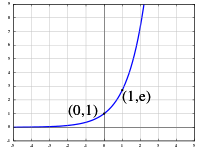
It seems to me through the many videos that I watched that many people don't really understand what the "Expo" (Exponential) function does on an RC transmitter. Most people believe that the expo will smoothen/dampen out the movements of the airplain and make it not so sensitive, which is not true, in fact, partially, the expo will MAKE the airplane more sensitive and twitchy. As I am studying engineering, I see exponential curves almost everyday, so I will try my best to explain how they work.
First of all, let's start by showing the difference between an exponential and a linear function. An exponential function is on the form y=e^x (^ means "to the power") and if we draw x vs y on a curve, here is how it will look like.
Opposed to exponential functions, there are linear functions whose
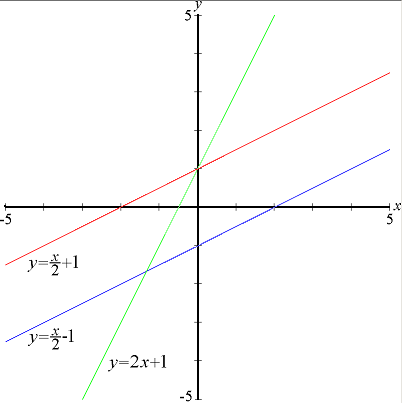 graph should look like a line. Here is an example of how they look.
You should naturally be wondering now, what the hell does this have to do with RC flying. I will explain that right now. Imagine that your control sticks are the X axis of the graph, when you move your stick to a certain position, your transmitter translates that into the y value of the curve, and that's the value that's actually sent to the receiver and thus to the servos.
Now let's see how each graph affects the airplane. The linear function, which is the default one, if you tilt (move) your control stick 1 degree (think of it as 1 mm), the servo moves 1 degree in that same direction (think of it also as 1 mm). Let's say you "really" want to dampen your airplane movements. This you can do by going to your airplane's curves and just making then look like a line that is not very steep, a little closer to the horizontal, this means that now, if you tilt your stick 1 degree, the servo will move only 0.5 degrees, which is "damping/smoothing" the movements. But this has a disadvantage, let's say that when you tilt you stick to the max it goes 10 degrees. Now your servo will go 5 degrees. When in fact, your servo can physically go up to 10 degrees. Thus you are using some maneuvrability, and actually some capability to recover from a possible crash for example.
The expo now comes in handy, let's see how the expo function behaves. In the expo function, the amount that the servo moves does not depend only on how much did you tilt your stick, but also on where it is. So for example if you center your stick to zero and then tilt it 1 degree, the servo will move 0.5 degrees. Now, take your stick and tilt it 9 degrees and consider that your new starting position. If you tilt your stick 1 more degree, the servo will react to that with a movement of 2 degrees now. I know it might be a little hard to grasp, just sit and look at the curves and think about it. What the expo function now does for you is that it makes movements near the zero position of the stick move the servos less, while movements near the extremes of the stick move the servo more. This is very useful because small movements near the center are usually used when you are hovering a helicopter and just making small adjustments to keep it in place, or flying and air plane on idle and also making small adjustments to keep it streigt or make a wide bank or something like that. At the same time, movements near the extremes of the stick are used when you are making stunts or trying to recover from a possible crash. In those situations, sensitivity doesn't really matter since you are already making big movements and jamming the stick left and right all the way.
So, to sum it up, expo doesn't decrease the twitchiness or the plane or dampen the movements, it does that only near the center of the stick, but compensates for this by making movements near the end of the stick more twitchy and sensitive to give you the full range of your control surfaces/servos. A linear function is just an almost direct map between your control sticks movement and the servo movement, which means, if you move your control stick 1 degree the servo will move 1 degree not depending on whether the stick moves near the center or near the extremes. (Please note that it doesn't necessarily mean that your servo will move 1 degree for each 1 degree tilt of the stick, the servo could move 2 or 3 degrees for each 1 degree from the stick... this was just an example to demonstrate. But you can change the amount the servo moves for each "x" movement of the stick in your curves or there was another place where you could set the throws or something like that. I just don't remember the name in the menus, you would specify how much % of the servo movement should correspond to your 100% stick movement, and the computer calculates everything else for you. Note, you have 2 settings for this, one is called Normal-Rates, and the other is called Dual-Rates, so basically you can configure 2 sets of curves, one for each.)
I hope this little article was helpful for somebody out there, please let me know if you like it.
Sunday, June 6, 2010
Only she looks at me that way

Taken in Wuerzburg, Germany on Saturday 5th of June 2010.
Image Type: jpeg (The JPEG image format)
Width: 3872 pixels
Height: 2592 pixels
Camera Model: NIKON D60
Date Taken: 2010:06:05 15:24:16
Exposure Time: 1/125 sec
Aperture Value: f/4.5
ISO Speed Rating: 100
Flash Fired: Flash did not fire
Metering Mode: Pattern
Exposure Program: Aperture priority
Focal Length: 32.0 mm
Software: Ver.1.01
Tuesday, April 13, 2010
Monday, January 18, 2010
Intelligence
Since this is my blog, this post talks about intelligence from my point of view.
I perceive most people as stupid :D. I don't dispite them, I don't judge them, and I don't disrespect them for that, but that's how I perceive it.
Why are most people not intelligent... Why do people fail to use their minds...
Here is my own explanation
For me, Intelligence is composed of three factors:
This is basically how your mind is constructed or something. You inherited that from your parents, your parents have over the years of evolution developed a mind that is more powerful than some and less powerful than others. You can't be more intelligent in that aspect. This type of intelligence grows as you grow, you are born with a tiny brain but that grows as you grow, and probably settles down and doesn't grow more around the age of 20-21 or something. Since I am a computer engineer, I'd like to call that your processor. Once you're working with a certain processor, you cannot get it running any faster, it's the hardware. BUT!! that's not everything, there's still a huge difference of what runs on that processor and what kind of information does that processor has access to. Everybody was born with some hardware; so everybody has the basic platform to work with. I perceive this type of intelligence as the least affecting the overall problem solving skills (practical intelligence) of a person.
2. The collection of knowledge:
This is composed of all the things you learned over the years... You already know solutions to some problems, actually a looooot of solutions to a looooot of problems. This information acts as your database of solutions to the problems you know. You can pull out a solution you already know and use it right away (or modify it a little and use it). Everything there is ready, organized, efficient, and pre-thought (either by you or someone else). For example, if I ask you this problem 1+1=?. You will answer right away, '2', because you (or your math book's author) already thought about that and you know it. The extra-ordinary thing is, THIS IS THE TYPE OF INTELLIGENCE THEN ARE TRYING TO TEACH YOU AT SCHOOL AND UNIVERSITY. They are actually trying to teach you how to be more intelligent by teaching you solutions that other people thought out before. This is the source of all technology today. In the old ages, people used to think of solutions to many problems; but these were not documented or not communicated to other people, and eventually lost. So at some point, people needed to rethink something many times because the pre-thought solution was not communicated to them, or completely lost. When the world started discovering means to communicate, document, and centralize solutions the world already knows, knowledge started spreading and the world seems to be becoming more intelligent. But the fact is, it's not.. Human brain anatomy didn't change; we didn't evolve that much, physically, in the past 500 years. The good news is, you can learn this type of intelligence. Just don't let some problem slip through your fingers without KNOWING and STORING the solution for it so it's ready next time you need it. The bad news is, you use a mere small fraction of the knowledge you collected. People feel if they learn a solution there will be a very small chance (probability) to use it later, because it's very rare that you're faces of a problem you learned the solution for. This urges people not to KNOW or STORE the solution for a problem they faced before because it seems too much effort for a very little chance to use it later. But guess what?? If everytime you face a problem and know the solution for it, you just neglect keeping this solution neatly stored in your mind, you will end up with no database at all... If your database is small, this makes things even worse, it makes the probability of finding a solution for a problem even smaller.. and you feel that there's even less chance of using it later. Pretty bad isn't it? This, in my opinion, is the main reason people are stupid. People you know that you think have solutions for everything simply know how to never let something go without KNOWing how and why this thing behaves that way, and they STORE that in their mind. You use this type of intelligence when you quickly solve a problem.
3. The way you think:
The way people think is different. Some people think about the theory/idea behind the problem, try to find a logical way, then formulate the solution according to that. Others may keep trying any random pattern of solution till the figure out the one that works. There are many types of thinking patterns, many of them I don't know of. This thinking pattern is self-taught, nobody would teach you that. You probably have taught yourself this over the years. You might even have many thinking patters, you might even have one that you favor other the others. You thinking pattern along with your database are our most powerful problem solving tools. You might even have a database of thining patters along with information about when to use them. I like to think of the thinking pattern as the algorithm that runs on your processor. Your algorithm might be stupod and takes a lot of time, may be even never reaches a solution, and your algorithm might be very intelligent and finds a solution in seconds. Your algorithm might be even more advanved that it detects the type of problem and executes a different algorithm suitable for the type of problem. For example, if you tell me unlock a small bicycle lock which has a combinational lock which has only 1 disk with numbers. I would right away try all of them and see which works. There are only 10 possibilities, trying each will take 2 seconds, you have your solution in 20 seconds. I know this because I have an entry in my database saying "Brute force (try all solutions) => use it when you have a small number of solutions". If the bicycle lock had 6 disks with numbers, I might now think about how this lock works and try to find a flaw in the design that would get it open. Or I might think what is the easiest way to break the lock/chain. Again, this type of intelligence is self-taught, it grows over the years. The bad news is, people are still stupid, why? Because people BELIEVE they cannot get more intelligent, they believe it soooo deep in their hearts that they completely don't try or even think remotely of the possibility there might be a way to be a little more intelligent. So they don't try to improve on their way of thinking, sometimes don't even perceive they have a way of thinking. This type of intelligence is slow, tiring, and needs thinking. You need to take your time with the problem and understand it, then come up with a solution, sometimes even in the form of many partial solutions that individually won't work. Remember, you need to STORE the result you came up with after you use this type of intelligence in your database; otherwise it will be very expensive to use this type every time.
Conclusion:
Your mind, is your mind, it will not change and it won't grow. But, what you use your mind for is completely changeable, you can think in a completely new way, you can learn different types of thinking, know them and know when to use each. You can also store a very large database of pre-thought solutions that you can very quickly modify or use out of the box (sorry out of your mind). The biggest part of your intelligence is self taught.
YOU CAN GET MORE INTELLIGENT. VERY EASILY.
I perceive most people as stupid :D. I don't dispite them, I don't judge them, and I don't disrespect them for that, but that's how I perceive it.
Why are most people not intelligent... Why do people fail to use their minds...
Here is my own explanation
For me, Intelligence is composed of three factors:
- Genetics: The power of mind you inherited from your parents (the processor).
- The collection of knowledge: The experiences and the things you learned (the database).
- The way you think: The way you taught yourself how to tackle a problem (the algorithm).
This is basically how your mind is constructed or something. You inherited that from your parents, your parents have over the years of evolution developed a mind that is more powerful than some and less powerful than others. You can't be more intelligent in that aspect. This type of intelligence grows as you grow, you are born with a tiny brain but that grows as you grow, and probably settles down and doesn't grow more around the age of 20-21 or something. Since I am a computer engineer, I'd like to call that your processor. Once you're working with a certain processor, you cannot get it running any faster, it's the hardware. BUT!! that's not everything, there's still a huge difference of what runs on that processor and what kind of information does that processor has access to. Everybody was born with some hardware; so everybody has the basic platform to work with. I perceive this type of intelligence as the least affecting the overall problem solving skills (practical intelligence) of a person.
2. The collection of knowledge:
This is composed of all the things you learned over the years... You already know solutions to some problems, actually a looooot of solutions to a looooot of problems. This information acts as your database of solutions to the problems you know. You can pull out a solution you already know and use it right away (or modify it a little and use it). Everything there is ready, organized, efficient, and pre-thought (either by you or someone else). For example, if I ask you this problem 1+1=?. You will answer right away, '2', because you (or your math book's author) already thought about that and you know it. The extra-ordinary thing is, THIS IS THE TYPE OF INTELLIGENCE THEN ARE TRYING TO TEACH YOU AT SCHOOL AND UNIVERSITY. They are actually trying to teach you how to be more intelligent by teaching you solutions that other people thought out before. This is the source of all technology today. In the old ages, people used to think of solutions to many problems; but these were not documented or not communicated to other people, and eventually lost. So at some point, people needed to rethink something many times because the pre-thought solution was not communicated to them, or completely lost. When the world started discovering means to communicate, document, and centralize solutions the world already knows, knowledge started spreading and the world seems to be becoming more intelligent. But the fact is, it's not.. Human brain anatomy didn't change; we didn't evolve that much, physically, in the past 500 years. The good news is, you can learn this type of intelligence. Just don't let some problem slip through your fingers without KNOWING and STORING the solution for it so it's ready next time you need it. The bad news is, you use a mere small fraction of the knowledge you collected. People feel if they learn a solution there will be a very small chance (probability) to use it later, because it's very rare that you're faces of a problem you learned the solution for. This urges people not to KNOW or STORE the solution for a problem they faced before because it seems too much effort for a very little chance to use it later. But guess what?? If everytime you face a problem and know the solution for it, you just neglect keeping this solution neatly stored in your mind, you will end up with no database at all... If your database is small, this makes things even worse, it makes the probability of finding a solution for a problem even smaller.. and you feel that there's even less chance of using it later. Pretty bad isn't it? This, in my opinion, is the main reason people are stupid. People you know that you think have solutions for everything simply know how to never let something go without KNOWing how and why this thing behaves that way, and they STORE that in their mind. You use this type of intelligence when you quickly solve a problem.
3. The way you think:
The way people think is different. Some people think about the theory/idea behind the problem, try to find a logical way, then formulate the solution according to that. Others may keep trying any random pattern of solution till the figure out the one that works. There are many types of thinking patterns, many of them I don't know of. This thinking pattern is self-taught, nobody would teach you that. You probably have taught yourself this over the years. You might even have many thinking patters, you might even have one that you favor other the others. You thinking pattern along with your database are our most powerful problem solving tools. You might even have a database of thining patters along with information about when to use them. I like to think of the thinking pattern as the algorithm that runs on your processor. Your algorithm might be stupod and takes a lot of time, may be even never reaches a solution, and your algorithm might be very intelligent and finds a solution in seconds. Your algorithm might be even more advanved that it detects the type of problem and executes a different algorithm suitable for the type of problem. For example, if you tell me unlock a small bicycle lock which has a combinational lock which has only 1 disk with numbers. I would right away try all of them and see which works. There are only 10 possibilities, trying each will take 2 seconds, you have your solution in 20 seconds. I know this because I have an entry in my database saying "Brute force (try all solutions) => use it when you have a small number of solutions". If the bicycle lock had 6 disks with numbers, I might now think about how this lock works and try to find a flaw in the design that would get it open. Or I might think what is the easiest way to break the lock/chain. Again, this type of intelligence is self-taught, it grows over the years. The bad news is, people are still stupid, why? Because people BELIEVE they cannot get more intelligent, they believe it soooo deep in their hearts that they completely don't try or even think remotely of the possibility there might be a way to be a little more intelligent. So they don't try to improve on their way of thinking, sometimes don't even perceive they have a way of thinking. This type of intelligence is slow, tiring, and needs thinking. You need to take your time with the problem and understand it, then come up with a solution, sometimes even in the form of many partial solutions that individually won't work. Remember, you need to STORE the result you came up with after you use this type of intelligence in your database; otherwise it will be very expensive to use this type every time.
Conclusion:
Your mind, is your mind, it will not change and it won't grow. But, what you use your mind for is completely changeable, you can think in a completely new way, you can learn different types of thinking, know them and know when to use each. You can also store a very large database of pre-thought solutions that you can very quickly modify or use out of the box (sorry out of your mind). The biggest part of your intelligence is self taught.
YOU CAN GET MORE INTELLIGENT. VERY EASILY.
Friday, January 1, 2010
Roasted Chicken (Recipe)
Here's a very very simple and fast recipe for you.
Ingredients:
- 1 Chicken
- 1 to 1 1/2 tsp salt
- 1/2 tsp ground pepper
- 1/2 tsp allspice (optional)
- ground red hot pepper (optional)
- 2 tbsp oil
Recipe:
- Wash your chicken
- cut through the center of the breast of the chicken, through the breastbone until the breast is completely separated
--> OR cut an medium onion in wedges and place it in your chicken
- season the outside of the chicken with the spices you have
- flip the chicken open through the cut and place it in a pan (see picture) and cut some slits through the breast and thighs
--> OR if you didn't cut the chicken then place it in a pan and cover it with aluminum foil
- place your chicken in a preheated over, 180 deg C in case of the cut chicken, or 220 in case of a chicken covered in foil.
- leave the chicken in for 1 to 1 1/2 hours (uncover the foil for the last 10-20 minutes in case of the whole chicken)
Enjoy it and tell me if you liked it :D
Ingredients:

- 1 Chicken
- 1 to 1 1/2 tsp salt
- 1/2 tsp ground pepper
- 1/2 tsp allspice (optional)
- ground red hot pepper (optional)
- 2 tbsp oil
Recipe:
- Wash your chicken
- cut through the center of the breast of the chicken, through the breastbone until the breast is completely separated
--> OR cut an medium onion in wedges and place it in your chicken
- season the outside of the chicken with the spices you have
- flip the chicken open through the cut and place it in a pan (see picture) and cut some slits through the breast and thighs

--> OR if you didn't cut the chicken then place it in a pan and cover it with aluminum foil
- place your chicken in a preheated over, 180 deg C in case of the cut chicken, or 220 in case of a chicken covered in foil.
- leave the chicken in for 1 to 1 1/2 hours (uncover the foil for the last 10-20 minutes in case of the whole chicken)
Enjoy it and tell me if you liked it :D
Saturday, December 26, 2009
Christmas Turkey - Episode IV - Roasting (Recipe)
Now the final stage, roasting your turkey:
You can say this is the easiest part :D
Since I don't have a meat thermometer, then I will provide guidelines to get the turkey well done without using one. Moreover because we, egyptians, like our meat very well cooked, this recipe will get ur turkey very well cooked. If you don't like that, you might want to follow something like these guidelines.
Ingredients:
- some butter (same as from seasoning)
Recipe:
- Put the turkey in a roasting pan, or on the oven rack and put a pan under it to collect the dropping juices.
- cover the seasoned and buttered turkey with a tent of alumunim foil (donot let the tent touch the turkey, this might cause the skin to stick to the tent and tear on removal).
- preheat the oven to 220-230 deg C.
- put the covered turkey in the preheated oven.
- leave the turkey for 40 minutes, then turn the heat down to 180 deg C.
- calculate the cooking time, 40 additional minutes for each kg of turkey, this is the minimum time for cooking. for my turkey it was 40+40*5.6 = 4.4 hours
- for a well done turkey, calculate it based on 50 additional minutes for each kg, for my turkey 40+50*5.6 = 5.33 hours
- now leave the turkey alone for all except the last hour of cooking.
- when 1 hour is remaining, take the turkey out, remove the tent, and paint it with butter. Now put it back in the oven without the tent.
- redo the last step every 15-20 minutes until your turkey looks exactly the way you want.
Guten appetit.
You can say this is the easiest part :D
Since I don't have a meat thermometer, then I will provide guidelines to get the turkey well done without using one. Moreover because we, egyptians, like our meat very well cooked, this recipe will get ur turkey very well cooked. If you don't like that, you might want to follow something like these guidelines.
Ingredients:
- some butter (same as from seasoning)
Recipe:
- Put the turkey in a roasting pan, or on the oven rack and put a pan under it to collect the dropping juices.

- cover the seasoned and buttered turkey with a tent of alumunim foil (donot let the tent touch the turkey, this might cause the skin to stick to the tent and tear on removal).
- preheat the oven to 220-230 deg C.

- put the covered turkey in the preheated oven.
- leave the turkey for 40 minutes, then turn the heat down to 180 deg C.
- calculate the cooking time, 40 additional minutes for each kg of turkey, this is the minimum time for cooking. for my turkey it was 40+40*5.6 = 4.4 hours
- for a well done turkey, calculate it based on 50 additional minutes for each kg, for my turkey 40+50*5.6 = 5.33 hours
- now leave the turkey alone for all except the last hour of cooking.
- when 1 hour is remaining, take the turkey out, remove the tent, and paint it with butter. Now put it back in the oven without the tent.

- redo the last step every 15-20 minutes until your turkey looks exactly the way you want.
Guten appetit.
Subscribe to:
Posts (Atom)
